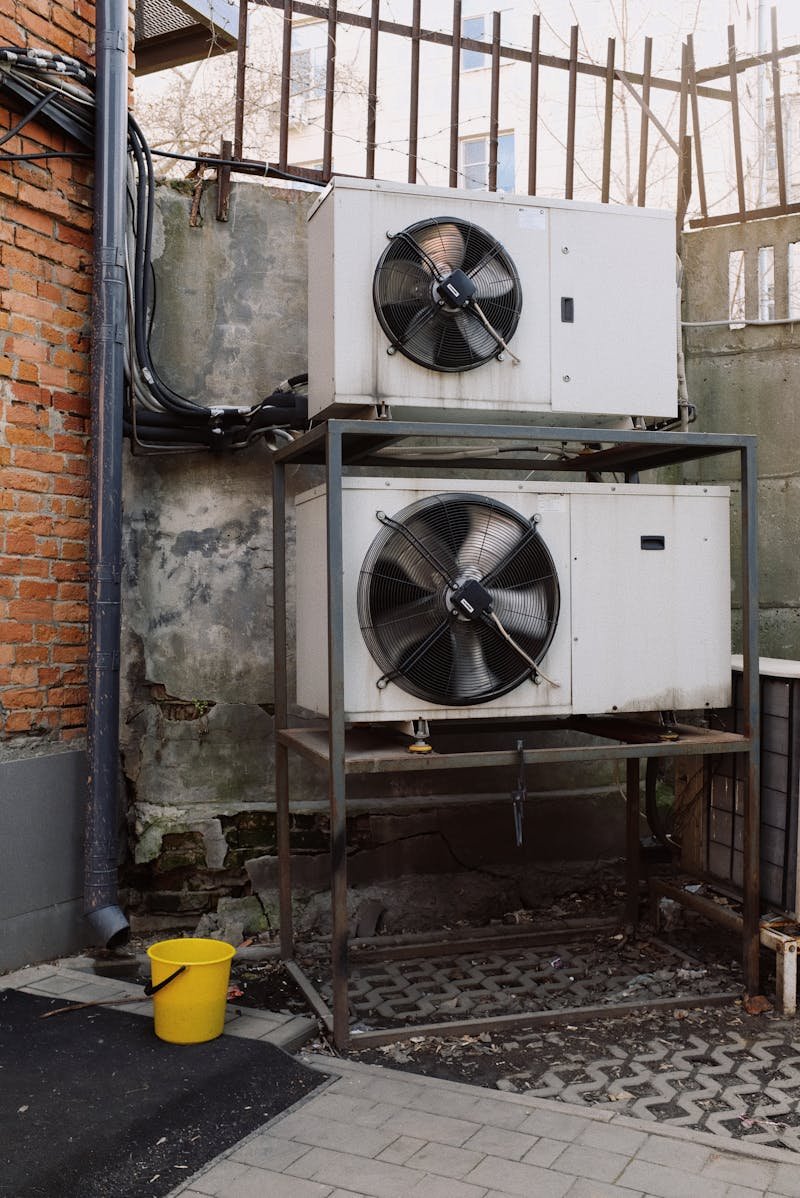
If your AC fails during a Houston heat wave, it is almost never random. The system has been signaling for weeks. The reason most homeowners do not catch it is that the warnings are quiet and the heat is loud.
Houston is one of the hardest HVAC operating environments in the United States. Systems here run about 2,200 hours per year, compared to a national average of around 1,200. That is roughly an 83% extra workload over comparable equipment in a milder climate. The result: capacitors that should last 10 years often fail in 6. Contactors burn out faster. Refrigerant leaks that would be slow elsewhere become operational problems faster here.
The five most common Houston AC failures
In our service data, summer breakdown calls cluster around the same handful of components every year.
1. Capacitor failure
The run capacitor stores the jolt of electricity the compressor needs to start. Houston heat ages capacitors faster than the rating suggests. A failing capacitor causes the system to short-cycle, struggle to start, or stop completely. You can sometimes hear a humming outdoor unit that does not spin up. The fix is a $20 part and 20 minutes of labor.
2. Contactor failure
The contactor is the electrical switch that tells the compressor to turn on. Contactors burn out from prolonged duty cycles. The symptom is similar to capacitor failure: humming or no response from the condenser. Diagnostic distinguishes the two.
3. Clogged condensate drain line
Houston humidity means your AC pulls a lot of water out of the air. That water exits through a drain line. When the line clogs with algae or biofilm, the secondary drain pan fills and a float switch shuts the system down. The fix is clearing the line, treating with a tablet, and confirming the float switch works.
4. Low refrigerant from a slow leak
Refrigerant is not consumed. If your system needs a recharge, you have a leak. Common leak points are evaporator coils, line set fittings, and Schrader valves. Adding refrigerant without finding the leak is a temporary fix that costs more long term than a proper leak search.
5. Dirty evaporator coil
The evaporator coil sits above your furnace or in your air handler. When it accumulates dust, airflow drops and cooling capacity drops with it. Severely dirty coils can even freeze over. Coil cleaning during annual maintenance prevents this entirely.
The expensive failures usually warn you first
Compressor and evaporator coil replacements are the most expensive HVAC repairs ($1,500 to $2,800+ for compressors, similar for coils). These rarely fail without warning. The signs in the weeks beforehand:
- Longer run times. The system runs but takes longer to reach setpoint. This is often the first sign of a refrigerant leak or coil contamination.
- Higher electric bills. A struggling system consumes more power for the same cooling. If your June electric bill jumps 20% with no schedule change, the system is losing efficiency.
- Uneven cooling. The thermostat reads 75, but one bedroom is 82. Often duct-related, but also a sign of insufficient capacity from a degrading system.
- Hissing or bubbling from indoor unit. A refrigerant leak at the evaporator coil makes a soft hissing or popping sound near the air handler.
- Frost on the outdoor unit lines. In Houston summer, ice on a refrigerant line means low charge or airflow problems. Shut the system off and call.
What a pre-season tune-up actually catches
A thorough spring tune-up takes about 60-90 minutes. It is not a five-minute visual. The checklist:
- Capacitor capacitance test (microfarad reading vs. nameplate rating)
- Contactor visual inspection for pitting or carbon buildup
- Refrigerant pressures (suction and head) with outdoor ambient logged
- Superheat or subcooling calculation depending on metering device
- Condensate drain line clear and treat
- Float switch functional test
- Evaporator coil visual inspection
- Blower motor amperage draw
- Temperature split (return vs. supply)
- Thermostat calibration check
- Filter condition and replacement
- Outdoor condenser coil cleaning
- Electrical connections tightened
A capacitor reading below 90% of its rated capacitance is a likely failure within 12 months. Catching it in April for $20 in parts is better than catching it in July as an emergency call.
What to do if your AC fails now
If your AC is not cooling right now, in Houston, in summer:
- Check the thermostat is set to cool and below room temperature.
- Check that air is moving from the registers. If no air, the blower or breaker is the issue.
- Check the filter. A completely clogged filter can cause the system to stop cooling.
- Look at the outdoor condenser. Is it running? Is there visible frost?
- If none of the above is obvious, call us at (281) 307-4644.
We diagnose first, present a flat-rate quote, and only then begin work. Most Houston AC failures are resolved the same day when the call comes in before 2 PM.
Prevention is the actual answer
The cheapest summer breakdown is the one that did not happen. Our maintenance plans include pre-summer and pre-winter visits, priority scheduling, and discounted repair rates. For a Houston system running 2,200+ hours a year, that is not optional. It is operating cost.